
Dreaming about pregnancy: what is known, and what is only said.
Dreaming about pregnancy is reported by men, by post-menopausal women, and by people with no intention of having children — which rules out the literal reading immediately. The traditional interpretation is something developing that is not yet ready to be seen. Research offers no specific finding, and this entry does not pretend otherwise. It is not a sign of pregnancy, and it is not a prediction of one.
Also asked as dreaming about being pregnantpregnancy dreamdreaming someone is pregnant
Nothing specific. There is no well-replicated study behind this symbol, so this entry does not pretend there is — it gives the tradition, clearly labelled, and the questions that make it usable.
 Written byEmily ParkerAstrology & Tarot Writer
Editorial review byMyMysticDay Editorial TeamEditorial standards reviewer
Written byEmily ParkerAstrology & Tarot Writer
Editorial review byMyMysticDay Editorial TeamEditorial standards reviewer
What has actually been measured
Dreams that stage an ending — a death, a funeral, a wedding — are among the most distressing to wake from and among the least literal. There is no evidence that they anticipate events. There is good evidence that they cluster around periods of actual transition in waking life.
Where dreamers are actually pregnant or trying to conceive, pregnancy dreams become far more frequent — straightforward continuity. Outside that, there is no established finding, and the honest answer is that the tradition is the only material available.
What pregnancy has traditionally been taken to mean
Read as gestation in the broadest sense: a project, an idea, a change forming before it is announceable. Older sources sometimes read it literally, which is where a good deal of unnecessary hope and fear has come from.
That reading is reported here as tradition, which is what it is. It is centuries of accumulated association, it varies by culture, and it has never been shown to predict anything. It is worth knowing because it is the language most people already carry into the question — not because it is a finding.
The detail usually carries more than the symbol
In dream content analysis the verb is more informative than the noun: what was happening, who was present, and how the dream ended distinguish two dreams that share an image entirely. These are the variants people report most often.
- Being pregnant without knowing how — The most commonly described form, and the one the tradition reads as an unannounced change.
- Someone else pregnant — Content analysis is clear that dreamed people carry the dreamer's concerns, not their own.
- A birth that is not frightening — Frequently reported and rarely distressing, unlike most transition imagery.
Questions that get further than a definition
A dream dictionary can tell you what an image has meant to other people. Only you have the waking context that makes it mean anything here. These are the questions that reliably produce something usable, and they work whether or not you find the symbolic reading convincing.
- Is something you are making not yet ready to be shown?
- In the dream, was the pregnancy welcome, hidden, or a surprise?
- Whose was it?
- Is a decision currently in a stage where it cannot be rushed?
What this entry does not claim
Nothing on this page predicts an event, diagnoses a condition, or reports anything about another person's intentions. Dreaming about pregnancy is not a warning, a message, or a sign, and no study has ever shown it to be one.
What the research supports is narrower and more useful: dream content tends to continue waking concerns rather than announce future ones. That makes a recurring dream worth paying attention to as information about now — and worthless as information about next week.
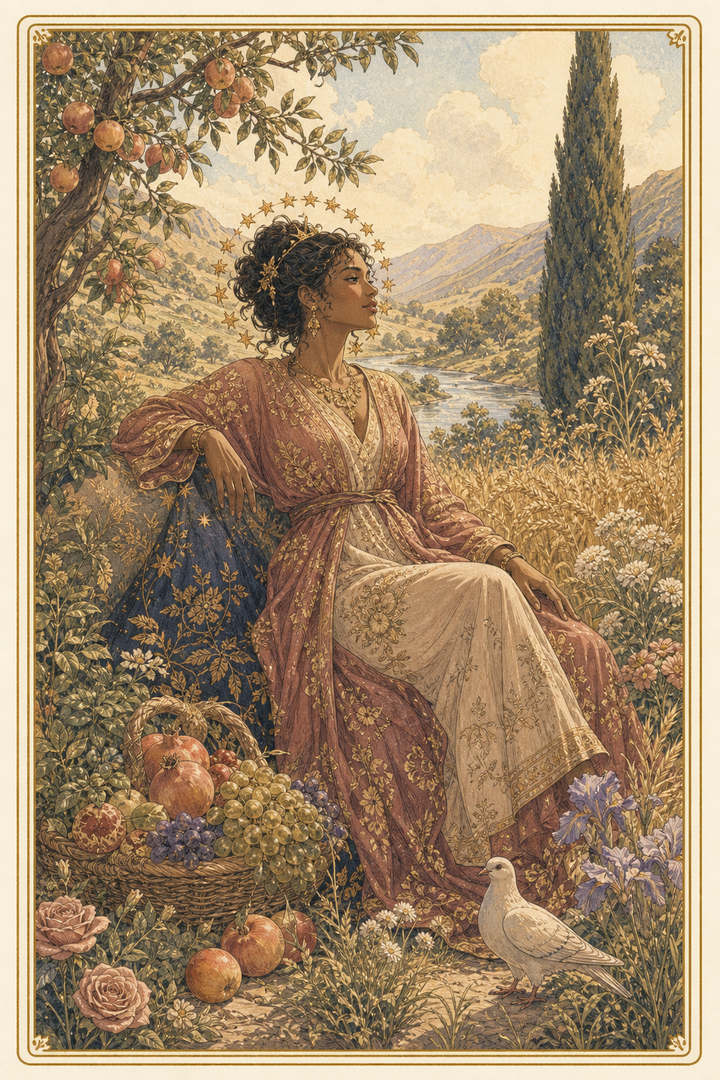
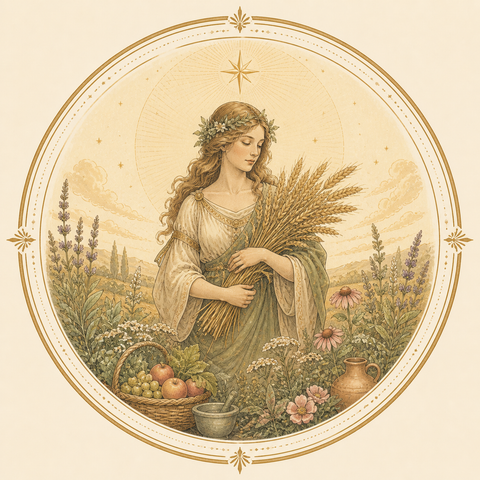
The same image, drawn
The Empress
Care, creativity, and sustainable abundance — the making of something living.
Read the cardNearby
Dreams that arrive in the same weeks.
Related by how they are reported together, not by keyword.
If it keeps coming back
A recurring dream is information about now.
Continuity is the best-supported finding in the field: content follows waking concerns. Which means a repeated image is worth recording alongside the days around it — memory is a poor instrument for noticing what a dream has been continuous with.
- Write it within minutes Detail fades quickly after waking
- Name the feeling It belongs in the record, not beside it
- Add the day before Continuity needs both sides to show