
MOON natal placement
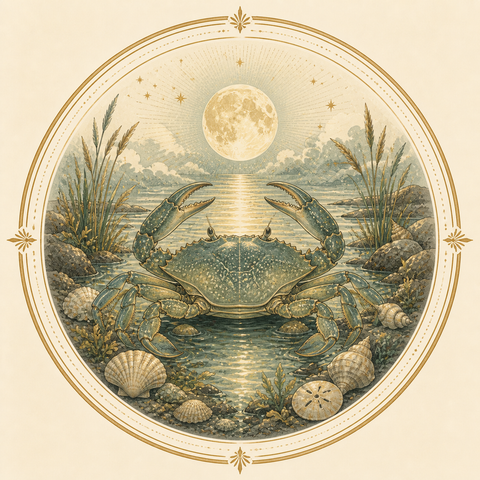
Moon in Cancer: where the function meets the style.
Moon in Cancer combines emotional regulation and instinct with Cancer’s drive to create belonging by noticing what people and places need to feel held. Emotional memory is strong, belonging is central, and care works best when protection does not become permanent retreat. This describes one natal placement, not a complete personality or a prediction.
emotional regulation and instinct
to create belonging by noticing what people and places need to feel held
emotional attunement through nurture
 Written byEmily ParkerAstrology & Tarot Writer
Editorial review byMyMysticDay Editorial TeamEditorial standards reviewer
Written byEmily ParkerAstrology & Tarot Writer
Editorial review byMyMysticDay Editorial TeamEditorial standards reviewer
What Moon in Cancer means
Moon in Cancer combines emotional regulation and instinct with Cancer’s drive to create belonging by noticing what people and places need to feel held. Emotional memory is strong, belonging is central, and care works best when protection does not become permanent retreat. This describes one natal placement, not a complete personality or a prediction.
In natal interpretation, Moon describes needs, habits, memory, belonging, and the automatic way experience is metabolized. Cancer supplies a Water style and a Cardinal rhythm. The planet is the function; the sign is the method.
The gift when the placement has room
The central potential is emotional attunement expressed through emotional memory, protectiveness, receptivity, and instinct for care. That can make Moon in Cancer especially capable of applying “nurture” as a strategy in the part of life described by Moon.
The placement becomes more flexible when it protects belonging and emotional safety without assuming everyone processes emotional regulation and instinct the same way.
- What helps me feel safe enough to respond rather than react?
- Contextual, feeling-led, and attentive to what is implied but not said
- Separate memory from the present, ask directly for reassurance, and let care move both ways
Where the same strategy can tighten
The planet’s general risk is letting an old reflex run the present; Cancer can add defending against an old hurt before the present situation is understood. Neither is a verdict. They name the point where an effective strategy may be operating past its useful range.
A grounded growth move is to separate memory from the present, ask directly for reassurance, and let care move both ways The aim is not to suppress the placement, but to give its original gift more choice.
How the pattern may become observable
In relationship, Cancer symbolism seeks desires trust, privacy, tenderness, continuity, and a home base that feels emotionally real. Through Moon, that pattern is most visible in emotional regulation and instinct—which is why this placement should not be mistaken for a complete love profile.
At work, Cancer does best when stewardship, human needs, continuity, or a sense of place matter. The placement can contribute emotional attunement, but profession and success depend on skills, conditions, opportunity, and the rest of the chart.
- care lead
- historian
- community steward
Domicile is context, not a grade
Traditional dignity language says the planet is at home here, so its symbolism tends to read directly.
Essential dignity is a traditional interpretive framework. Classical and modern schools disagree about some assignments, especially Uranus, Neptune, and Pluto. MyMysticDay names the convention instead of turning it into a “good/bad” score.
What changes the reading of Moon in Cancer
The house shows where the placement acts, exact aspects show which other chart functions cooperate or conflict, and degree can add boundary or aspect sensitivity. Chart rulership can make one planet more structurally important.
Moon is a instinctive placement. Its sign matters, but house, degree, aspects, and the condition of its ruler decide how personally and visibly it operates.
The sign itself
Understand Cancer on its own terms.
The protector — to create belonging by noticing what people and places need to feel held. Eight guides answer the questions that come after the placement.
Your chart is the relationship
One placement becomes personal in context.
Calculate its house, degree, aspects, and ruler. That is where a general meaning becomes a chart-specific pattern.
- Moon in Cancer Your date gives the sign; your time refines it
- Its house Needs your birth time and place
- Its aspects Angles to the other planets in your chart
- Ruled by Moon Where that planet sits adds the next clue